
Corinna Kühnapfel
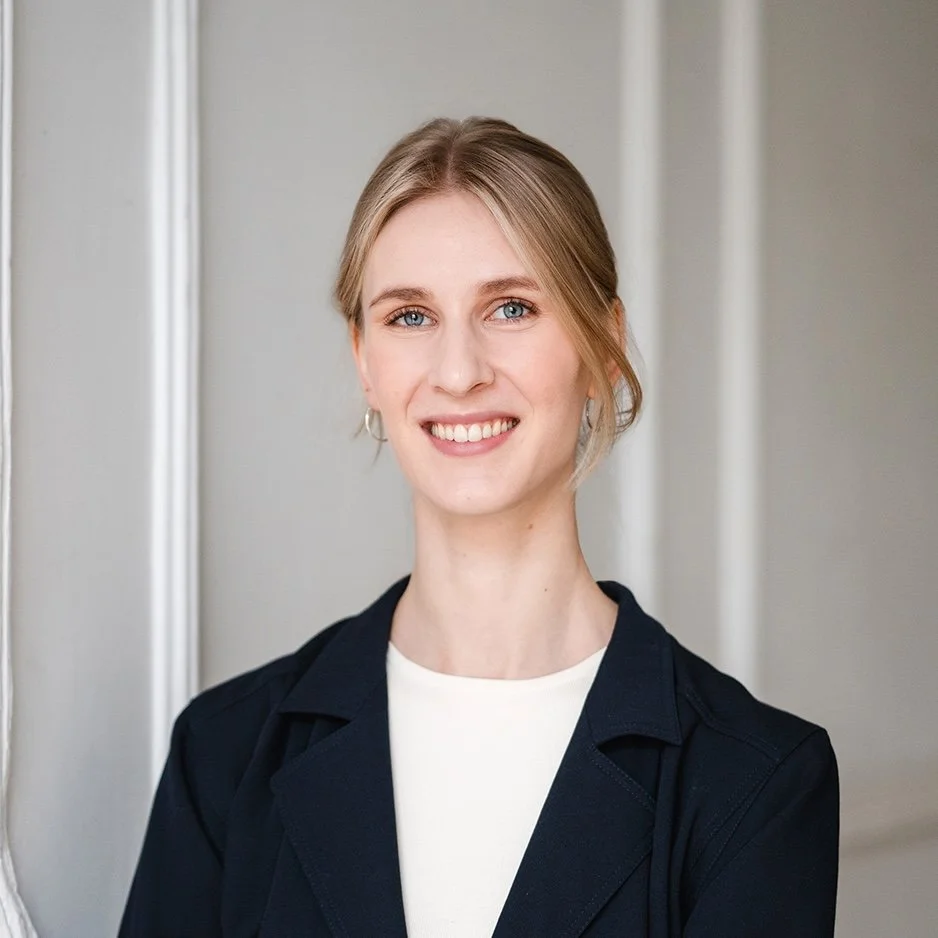
About Me
I am a postdoctoral researcher in the ERC-funded project Affective Aesthetic Cognitivism and Wonder (AAC_Wonder), based at the Arts and Minds Lab, Chair of Philosophy of Cognition, Technische Universität Berlin, where I study how wonder deepens engagement with art and expands understanding. More broadly, I am driven by the question of when and how art experiences become moving, meaningful, or transformative.
Previously, I was a postdoctoral researcher at the Research Platform Neurourbanism (RPN), Berlin School of Mind and Brain, Humboldt-Universität zu Berlin, where I examined how public art and urban aesthetics shape people's perception of the city, social and behavioral affordances, and sense of belonging in everyday urban contexts.
My academic background is in Cognitive Science (B.Sc.) and Embodied Cognition (M.Sc.). From 2020-2023, I completed my Ph.D. as part of the ARTIS project (Art and Research on Transformations in Individuals and Societies) at the Faculty of Psychology, Department of Cognition, Emotion, and Methods in Psychology at the University of Vienna, supervised by Asst. Prof. Matthew Pelowski and Prof. Dr. Joerg Fingerhut.
The ARTIS project combines nine research institutions in psychology/neuroscience, art education, and societal engagement, with a focus on researching, applying, and communicating the efficacy of arts-based initiatives for societal challenges and health.
In my dissertation research, I investigated the role of the body in art experiences by examining installation art as a form noted for its ability to evoke and require the use of the body, movement in the art gallery, and the role of individual differences in body awareness for emotional experiences of art.
I am also a co-founder of EDGE e.V., a non-profit international association and community of artists and scientists who share a common fascination with, or actively research, the intersections of art and neuroscience. Through workshops and art exhibitions, we foster collaboration between artists and scientists and to communicate neuroscience research to the public.
Earlier in my career, I worked as a student assistant at Schering Stiftung, the Association of Neuroaesthetics e.V., the Einstein Visiting Fellow group of Prof. Jesse Prinz “Consciousness, Emotions, Values,” and the Empirical Visual Aesthetics (EVA) lab.
For questions, collaborations, or exchanges, feel free to reach out via e-mail or find me on LinkedIn and Research Gate.
Main publications:
Kühnapfel, C., Bentlin, F., Beier, T., Million, A., & Fingerhut, J. (2026). Public art boosts beauty, invitingness, and belonging across urban contexts: A comparative case study of two contrasting sites [Preprint]. SSRN. https://doi.org/10.2139/ssrn.6182532
Kühnapfel, C., Kutsche, J., & Fingerhut, J. (2026). The impact of mood and affective priming on art evaluation: A systematic literature review [Preprint]. https://doi.org/10.31234/osf.io/7nbf2_v1
Kühnapfel, C., Demmer, T. R., Liu, T., Leder, H., & Pelowski, M. (2026). Art as a bridge between brains? A study of artist and viewer emotion communication in abstract drawing using fNIRS hyperscanning [Preprint]. https://doi.org/10.31234/osf.io/3bkd5_v1
Kühnapfel, C., Trupp, M., Pelowski, M., & Fingerhut, J. (2025). On the impact of public art: How engaging a pedestrian-level exhibition improves neighbourhood connectedness and well-being. Wellbeing, Space and Society, 100252.https://doi.org/10.1016/j.wss.2025.100252
Pistolas, E., Kühnapfel, C., Quétard, B., Smets, L., & Wagemans, J. (2025). Filling in the blanks of Ganzfeld art. Psychology of Aesthetics, Creativity, and the Arts. https://doi.org/10.1037/aca0000831
Fingerhut, J., & Kühnapfel, C. (in press). Art and embodied aesthetic emotions. In A. Scarinzi (Ed.), Situating the aesthetic mind: Human emotions and artificial intelligence.
Dehove, M., Pelowski, M., Mikuni, J., Tanaka, T., Ishizu, T., Kühnapfel, C., Leder, H., Kawabata, H., & Chamberlain, R. (2024). Is abstract art really a “universal” language of emotion? The impact of culture and individual differences on emotion expression and recognition between perceivers and artists in abstract drawing. Preprint.https://doi.org/10.2139/ssrn.4897656
Cabbai, G., Kühnapfel, C.(joint first authors), Fingerhut, J., Kaltwasser, L., Prinz, J., & Pelowski, M. (2024). Emotion, embodiment, and aesthetic appraisal: The impact of interoceptive abilities and art type. Psychology of Aesthetics, Creativity, and the Arts.https://doi.org/10.1037/aca0000716
Weingarden, L., Pelowski, M., & Kühnapfel, C. (2023). Embodying the photographic image: Charles Marville’s Old Paris and New Paris series. In C. V. Kayser (Ed.), Art as experience of the living body. An East/West dialogue / un dialogue Orient/Occident (pp. 261–291). Vernon Press.
Kühnapfel, C., Fingerhut, J., Brinkmann, H., Ganster, V., Tanaka, T., Specker, E., Mikuni, J., Güldenpfennig, F., Gartus, A., Rosenberg, R., & Pelowski, M. (2023). How do we move in front of art? How does this relate to art experience? Linking movement, eye tracking, emotion, and evaluations in an ecologically valid gallery setting. Empirical Studies of the Arts.https://doi.org/10.1177/02762374231160000
Kühnapfel, C., Fingerhut, J., & Pelowski, M. (2023). The role of the body in the experience of installation art: A case study of visitors’ bodily, emotional, and transformative experience in Tomás Saraceno’s in orbit. Frontiers in Psychology, 14, 1192689. https://doi.org/10.3389/fpsyg.2023.1192689
Demmer, T. R., Kühnapfel, C., Fingerhut, J., & Pelowski, M. (2023). Does an emotional connection to art really require a human artist? Emotion and intentionality responses to AI- versus human-created art and impact on aesthetic experience. Computers in Human Behavior, 148, 107875. https://doi.org/10.1016/j.chb.2023.107875
Kühnapfel, C., & Kruft, H. (2022). A neuropsychological perspective on architecture and the body. In M. Ballestrem & T. Simon-Meyer (Eds.), From body to space. An architectural relation (pp. 24–31). HafenCity Universität Hamburg. https://doi.org/10.34712/142.32